%201.svg)

Real-Time Adjudication for Health Insurance Claims

Issue Summary
Claims administration and adjudication constitute roughly 3% to 6% of revenues for providers and payers, represent an outsized share of administrative spending in the US, and are the largest category of payer administrative expenses outside of general administration. These costs are driven mostly by the complexity of prevailing adjudication processes, which vary across payers (e.g., through lack of claims standardization), continue to rely on manual input and review, and involve significant time delays for patients. Standardized, real-time submission and adjudication of claims from clinical records—along with streamlining associated processes—offer the potential to reduce these costs substantially, as well as to promote price transparency around payments for medical care. Despite these advantages, however, uptake of real-time adjudication (RTA) remains low, with coordination failures between providers, health plans, and health IT services vendors presenting major barriers absent policy intervention.
Policy Recommendation
We propose overcoming this coordination failure through a series of interventions for payers, providers, and relevant vendors, including: (1) standardization of claims forms and adjudication processes across all providers and payers; (2) new standards for reducing coding complexity; and (3) incentives for adoption of RTA by providers and payers. Relevant mandates could draw on authority from a range of federal programs and statutes, including Medicare, Medicare Advantage, Medicaid, the Affordable Care Act (ACA) exchanges, federal employee health benefits, and other public insurance participation requirements (e.g., Conditions of Participation); Office of the National Coordinator Electronic Health Records certification (currently voluntary); tax exemptions for nonprofit providers and health plans; sections 1104 and 10109 of the ACA; and alternative payment model bonus payments under MACRA (The Medicare Access and CHIP Reauthorization Act), among others.
Potential Savings
We estimate potential savings of $15 per claim on average or a total of $45 billion annually—a figure broadly consistent with earlier calculations of $30 to $40 billion from prior analysts. This constitutes approximately 3.6% of commercial health spending. For illustrative purposes, assuming savings for only outpatient and professional services claims (i.e., excluding inpatient claims) implies an estimated “run-rate” savings of $20 to $30 billion per year.
Background
Administrative costs associated with health care delivery and insurance present a key target for addressing excessive US health spending (Papanicolas, Woskie, and Jha 2018; Himmelstein, Campbell, and Woolhandler 2020), and the largest source of these costs is the creation and processing of health insurance claims (Sherlock Company 2009, Sakowski et al. 2009). Claims are generated by health care providers to document medical services rendered to patients, and they are sent to insurers for billing following clinical encounters (e.g., medical office visits). To this end, claims adjudication serves as the basis for virtually all fee-for-service reimbursements from health insurers to providers—and ultimately for bills to patients from providers for services not fully reimbursed. Accordingly, health insurers in the US adjudicate over three billion medical claims each year across commercial and governmental lines of business: an average of 10 per enrollee (CAQH 2020). Though estimates vary, expenditures associated with claims adjudication across providers and payers constitute as much as 3% to 6% of practice revenues and premiums, respectively, or about $150 to $300 billion annually when scaled to corresponding national health spending (Sherlock Company 2009, Kahn 2010, Jiwani et al. 2014).
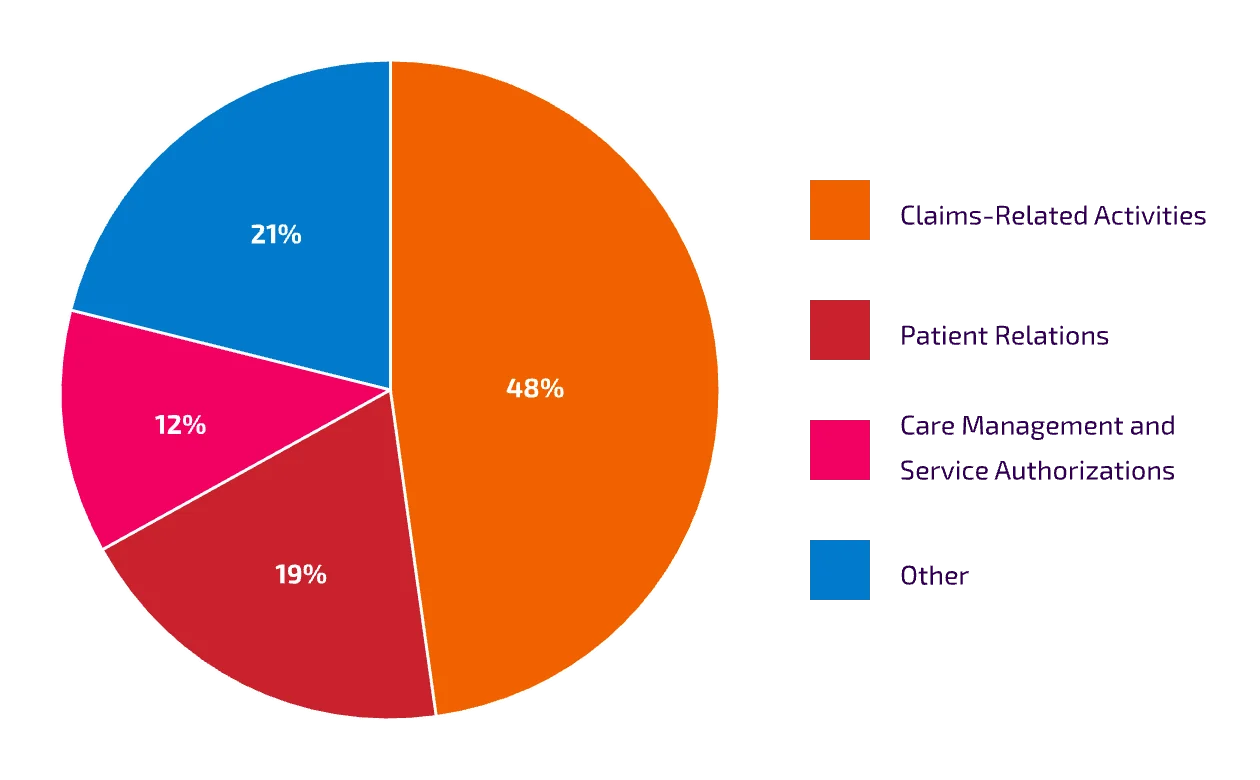
Figure 1. Allocation of Providers’ Administrative Staff Time by Activity (2006)
Evidence Base
Limitations of Claims Adjudication Today
The steep costs of adjudication today stem from the complex, fragmented, and manual nature of the core processes involved: on the one hand, for providers to originate and submit claims and, on the other, for payers to process claims and issue payments. On the provider side, for example, generating a claim typically involves extensive review by clinicians and billing administrators in order to “code” services rendered in a manner that maximizes reimbursable fee-for-service revenue, subject to payer-specific coverage guidelines. Industry surveys indicate that each claim submission requires an average of three to four minutes of provider staff time, not including time spent creating the claim itself,1 and related transactions such as eligibility verifications and prior authorizations can take over 10 minutes each on average (CAQH 2020, Tseng et al. 2018). With an average specialist office visit length of 20 minutes, the administrative burden on providers can infringe upon physician-patient interaction (Shaw et al. 2014). The time burden, furthermore, translates directly into staff costs. One study of a large multispecialty physician group in 2006 estimated that clinician time spent recording procedure codes alone could amount to 0.5% to 2.3% of practice revenues, and including other claims-related activities by clinicians and non-clinicians can increase this figure to 6% or more (Sakowski et al. 2009). Lack of standardization among provider claims forms and information prolongs this process. Though most providers submit claims pursuant to national standards set forth under the Health Insurance Portability and Accountability Act (HIPAA) and promulgated by the Department of Health and Human Services (HHS) (e.g., 837P and Form 1500 for professional services claims), there is significant variation in submission formats due to differences in provider- and payer-specific practices. Survey data in 2017 from the National Uniform Claim Committee shows that while nearly a quarter of providers submit all claims per the standard outpatient Form 1500, another 40% of providers submit fewer than 10% of claims per this standard.
Similarly, on the payer side, claims undergo substantial review for accuracy, standardization, and determination of payment amounts given services rendered. Roughly 80% of received claims today are adjudicated automatically with limited manual review,2 but 20% require manual inspection—and these include the highest-cost and most complex claims (Larsson 2017). Whereas auto-adjudicated claims are processed in minutes and for pennies on the dollar, claims undergoing manual review take several days or weeks for processing and as much as $20 per claim to do so (Miller 2013). Here, too, lack of process and format standardization increases costs of review for payers, such as by contributing to provider errors in claims submission. A recent estimate in commercial insurance by the American Medical Association put the error rate in adjudication at 7% of claims (Morse 2016). More broadly, because the claims review process can result in payers reducing reimbursement of a claim, it fosters a zero-sum “arms race” in adjudication between providers and payers, with each side spending to enhance capabilities around billing codes and audits, respectively.
Furthermore, despite the widespread adoption of electronic medical records in recent years spurred by the Health Information Technology for Economic and Clinical Health (HITECH) Act (Adler-Milstein and Jha 2017), both providers and insurers continue to rely heavily on paper-, email-, and fax-based submissions for adjudication and related processes. Even as most claims are submitted electronically through online provider portals or through claims clearinghouses, about 5% continue to be handled manually, for which the costs per submitted claim can be more than double (CAQH 2020). Moreover, many processes outside of claim submission that are central to the adjudication process—including verification of patient benefits, prior authorization of medical services, etc.—exhibit comparatively high rates of manual transmission. Nearly one in three claims status inquiries, for instance, continues to be manually conducted, and fewer than 15% of prior authorizations are fully electronic.
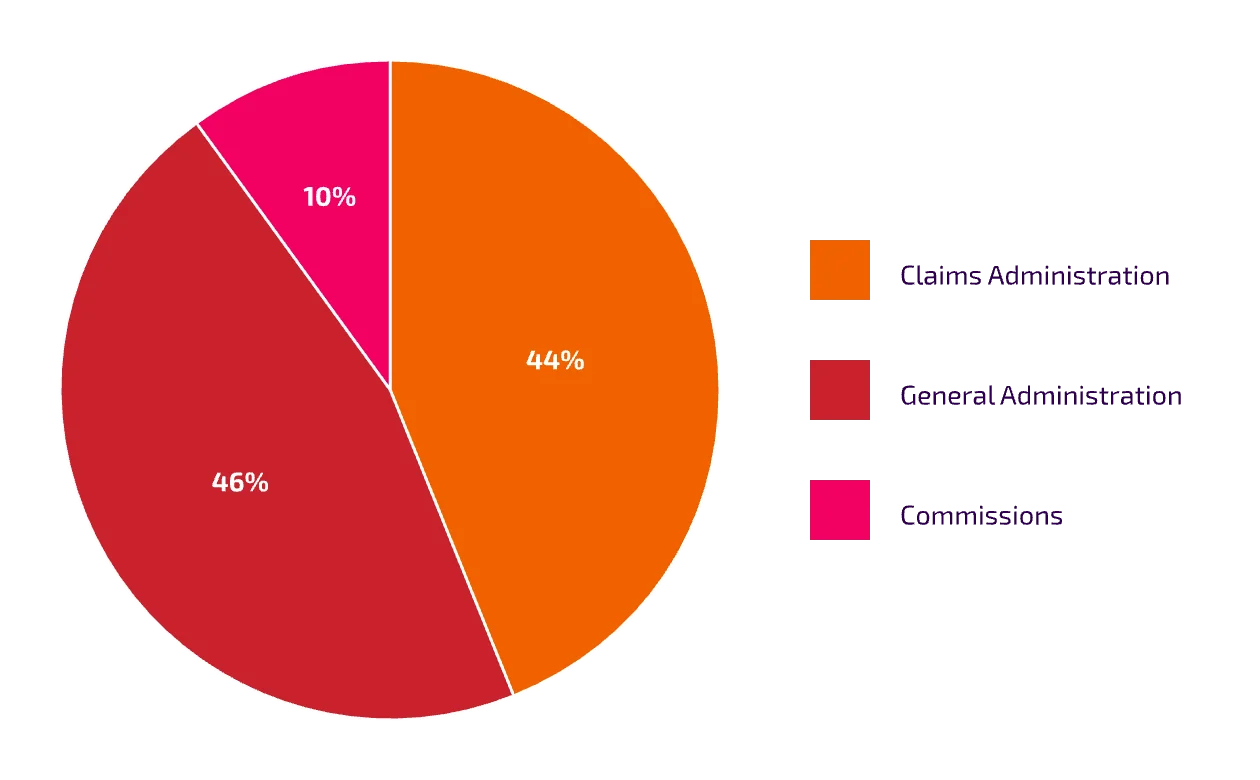
Figure 2. Allocation of Insurers’ Administrative Costs by Activity (2009)
Beyond the cost burden for the system, an important consequence of this process complexity for patients is a lack of timeliness and transparency around billing. Unlike other consumer transactions, medical bills, in most instances, are unavailable at the time and point of service. In fact, the modal claim is outstanding for five to 10 days following its corresponding clinical encounter, leaving patients in the interim without reliable price estimates, and this figure can stretch to 30 days or more (Benton 2014). For providers, adjudication delays often trigger unpaid-for medical bills, as bills are sent to patients weeks or months after a clinical encounter rather than at the point of service, resulting in half or more of billed services being sent to collections (Fletcher 2016). This dynamic has been exacerbated by changes in health insurance benefit design, including the emergence of high-deductible plans.3 The delays also inhibit flexible benefit structures to, for example, waive cost sharing in real time to incentivize patients’ use of high-value health care services, consistent with value-based insurance design principles.
Potential for Real-Time Adjudication and Barriers to Adoption
RTA offers a path to comprehensively address the limitations of claims administration today—and, in doing so, materially reduce national health care spending. Under RTA, claims would be generated, submitted, and processed electronically at the point of service (i.e., before the end of a clinical encounter), allowing for payment assurance for providers and transparent prices for patients on a timeline consistent with payments for other consumer services. A national system for RTA would be built around four main advances relative to the status quo. First is the automatic generation and submission of claims by providers directly off of the electronic medical record data.4 The second is pre-established, simplified payment and data-sharing frameworks between payers and providers to define allowable reimbursements with minimal manual review, including the exchange of clinical data to auto-validate services rendered. The third is complete auto-adjudication by payers of standardized claims, consistent with the pre-established payment framework. And the fourth is a shift to fully electronic submission and handling of ancillary processes like eligibility verification, prior authorization, claims status inquiries, and payment notices.
National implementation of RTA would represent a step change from today’s system of medical claims. Virtually no medical claims are currently adjudicated in real time. However, retail pharmacy claims are already real-time adjudicated—partly for reasons discussed further below—and therefore offer a test case for successful RTA implementation in the health system, notwithstanding important differences between the delivery of medical services and prescription drugs.5 Adjudication costs for pharmacy claims are admittedly difficult to compare directly to those of medical claims. Based on data from industry and the Medicare Part D program, however, these costs appear to be considerably lower than their analogues on the medical side.
At the same time, with adoption spreading of interoperable electronic medical records, sophisticated practice management software, and other modern IT capabilities (e.g., transcription services) in the delivery system, the toolbox of point solutions for implementing RTA is increasingly well stocked. In fact, a range of RTA initiatives have launched in recent years as part of small-scale insurer-provider collaborations and demonstrations by health IT vendors, with early results highlighting the potential for differentiated savings and improvements to the patient experience (Grubmuller 2009; Wikler, Bausch, and Cutler 2012; Premera Blue Cross 2018; Blue Shield of California 2018; InstaMed). These pilot initiatives corroborate the viability of RTA from both a technological and an operational perspective, and the variation among them also showcases flexibility on implementation within the RTA paradigm.6
Despite the promise of these models, they face a number of barriers to wider adoption absent statutory and regulatory change. These barriers lie largely along business-model dimensions rather than technological ones and are rooted primarily in coordination challenges among market participants not unlike those facing electronic medical record adoption prior to federal action in 2009 (HIMSS 2008). For instance, providers and insurers are understandably reluctant to invest in RTA-compatible technology and processes (e.g., data sharing) absent long-term commitments from counterparties to pursue RTA implementation coupled with economic incentives to do so.7 Additionally, the lack of fully realized industry-wide standards for claims (e.g., formats, submission processes, etc.) and interfaces for data exchange creates mutual incompatibilities between provider and payer workflows that preempt low-cost electronic interchange. Above all, establishing frameworks for predetermined payment levels to providers—thereby mitigating the adjudication “arms race”—is challenging in a market environment oriented around conventional fee-for-service incentives, where claims are subject to regular disputes between providers and insurers regarding billable charges for services rendered, and in one where coding complexity continues to increase (with, for example, the phase-in of ICD-10).
Policy Recommendation
In order to spur adoption of RTA and realize associated savings, Congress and HHS should work to address coordination challenges of market participants by developing and promulgating industry-wide adjudication standards, as well as by enacting financial incentives for adoption by payers, providers, and relevant vendors. This would effectively mean building on progress toward administrative and billing simplification first established via transaction and electronic data exchange standards as part of HIPAA in 1996 and more recently expanded under sections 1104 and 10109 of the ACA. The ACA provisions established a public-private standards-setting entity (i.e., CAQH CORE) and timeline for developing common operating rules for a subset of common transactions, such as eligibility and claims status inquiries, electronic payment notices, and electronic funds transfers, among others.
In principle, HHS adoption of the ACA-mandated administrative operating rules (i.e., for mandatory compliance by HIPAA-covered entities) has the potential to play a role akin to the one that the promulgation of the National Council for Prescription Drug Programs (NCPDP) Telecommunication and related standards have played in achieving RTA of pharmacy claims.8 Nevertheless, for the time being, the operating rules’ purview is constrained in two crucial ways. First, a number of operating rules that have been developed by CAQH CORE, including those pertaining to health claims, have yet to be formally adopted by HHS. Second, the ACA did not mandate a certification process for providers to demonstrate compliance with the adopted operating rules; it did so only with health plans. Congress and HHS should further develop and disseminate standards on transactions that bear on the adjudication process, including the ACA-mandated operating rules that HHS has not adopted, along with comprehensive mechanisms to evaluate compliance across health plans, providers, and relevant vendors (e.g., expanded certification).
As part of this rules-setting process, policy makers could also work with market participants to define standards for paring down the number of payment tiers associated with diagnostic and procedural billing codes for adjudication purposes, thereby curbing complexity in coding practices over time. Such standards would be analogous to the recent, albeit withdrawn Centers for Medicare and Medicaid Services (CMS) proposal to restructure coding requirements for evaluation and management services in the Physician Fee Schedule of Medicare Part B. In the context of the aforementioned “arms race” between insurers and providers, they could function as drawdown agreements around particular services by attenuating, at the margin, the impact of coding changes in claims on provider payment levels. A related and complementary approach would be to promote billing processes that diminish the reliance on billing codes for determining payment levels—for example, by insurers mapping electronic medical record documentation onto payment tiers with machine learning and other data analytics tools. This would be analogous to CMS’s use of clinical data in validating risk adjustment data in Medicare Advantage.
To set economic incentives for adoption of RTA based in part on the above standards, including technology grants (e.g., as under meaningful use in HITECH) and penalties for noncompliance (e.g., as in HIPAA), federal policy makers can exercise broad authority per a combination of existing levers, such as HIPAA, Medicare conditions of participation, payment model incentives under MACRA, interoperability provisions under the 21st Century Cures Act, tax exemptions for nonprofit providers and health insurers, and CMS’s broad programmatic authority over public health insurance programs. Incentives can be aligned to an adoption schedule that gradually phases in the benefits of RTA over time as network effects take hold and take into account the input of market participants on transition costs. This schedule could, for instance, focus on adoption of RTA in outpatient claims, which are generally simpler than inpatient claims and therefore more amenable to RTA. It could also start with targeting larger providers and payers that can more readily make the requisite capital investments and whose administrative software (e.g., practice management software) is more readily RTA-compatible. At a minimum, policy makers should drive RTA across public health insurance programs, including Medicare—both in traditional fee-for-service Medicare through Medicare Administrative Contractors and in Medicare Advantage through contracted payers. One predicate is the Administrative Simplification Compliance Act enacted in 2003, which mandated electronic claims submissions in Medicare.
More broadly, as policy makers continue to shift health care delivery and financing away from fee-for-service and toward value- and risk-based payment models, reliance on claims adjudication writ large would be expected to wane over time. (This is also true of vertically integrated insurer-provider entities like Kaiser Permanente.9) However, because value-based models are, for the most part, built on fee-for-service chassis, this transition does not attenuate the imperative to develop and disseminate RTA. In fact, as providers increasingly take on risk, payers and providers should be more inclined to agree to pre-established business rules that delineate payment levels (in the case of episodic payments) or covered services (to determine patient cost sharing in episodic and population-based models) at the point of care. Clinical data sharing of RTA would also serve as the foundation for more tightly integrated care coordination between risk-sharing providers and insurers.
Regardless of the specific form that RTA ultimately takes, there is significant unrealized opportunity and benefit for all involved—insurers, providers, patients, and the government—in finding more efficient ways to adjudicate health insurance claims, reflecting both policy objectives and robust market-based approaches.
Potential Savings
Industry estimates suggest that overall administrative costs—across providers and payers and including ancillary services like prior authorization—associated with claims adjudication today average $50 to $100 per claim.10 Under RTA, a portion of savings stems from the conversion of all manual transactions to electronic interchange; across transaction types, this is estimated by the Council for Affordable Quality Healthcare (CAQH) to represent approximately $10 billion in potential savings, or $3 per claim. Additional savings arise from full auto-adjudication; for the 20% of manually reviewed claims today and assuming a $10 difference in per-claim processing cost, this amounts to another $2 per claim on average in potential savings. More challenging to estimate on the provider side is the impact of auto-generation of claims, on the reduction of coding practice intensity, and on related administrative processes (e.g., the reduced need for claims status inquiries). RTA could similarly reduce insurers’ general administrative overhead, such as call center time for addressing claims inquiries. A conservative approach to the former is to assume savings amounting to half of the roughly 1.5% of practice revenues allocated to coding on average (near the midpoint of the 0.5% to 2.3% range cited previously), which would not encompass savings from related processes. When scaled over national inpatient and outpatient provider revenues, this represents potential savings of $10 per claim. In sum, these savings average about $15 per claim, for a total of $45 billion annually—a figure broadly consistent with earlier calculations of $30 to $40 billion from other analysts for related proposals (Wikler, Basch, and Cutler 2012; UnitedHealth 2009).11
An important caveat is that the complexity and cost of certain claims, including most inpatient claims, may ultimately continue to be best served with partial manual review rather than full RTA. For illustrative purposes, assume that RTA generates savings only for outpatient claims,10 based on the relative simplicity of such claims; the result would imply an estimated “run-rate” savings of $20 to $30 billion per year, if savings scale about proportionally based on share of spending. The estimates also do not account for one-time costs of transition and R&D for new software and processes of providers and insurers. Savings estimates assume other spending patterns are held fixed and represent a reduction in overall national expenditures, some portion of which would likely accrue to the federal budget via reduced outlays in public health insurance programs (including federal employee health benefits), as well as on increased income tax revenues as wages become less burdened by the costs of providing employer-sponsored health insurance.
Addendum
This addendum was prepared by the Health Care Affordability Lab at Yale.
Since this brief’s publication, new research has measured the cost of the billing frictions that real-time adjudication (RTA) is meant to remove. Drawing on detailed records of denials and resubmissions after physician visits, Dunn et al. (2024) estimate that physicians lose about 18% of Medicaid revenue, 4.7% of Medicare revenue, and 2.4% of commercial revenue to billing problems. Using physicians who move across state lines, they also find that the hassle of billing matters as much as payment rates in whether doctors accept Medicaid patients. Fragmented adjudication is not only costly, but it also therefore can limit patients’ access to providers.
On the policy side, CMS has moved to modernize the claims and health IT infrastructure that the authors called a precondition for RTA. The 2024 Interoperability and Prior Authorization Final Rule requires plans to speed up prior authorization decisions and build standardized data-sharing connections (FHIR APIs—a common format that lets EHRs, labs, and payers exchange data). The rule applies to Medicare Advantage, Medicaid, CHIP, and marketplace plans on the federal exchange, but not traditional Medicare. Two 2023 measures broadened the underlying data standards: the HTI-1 Final Rule expanded the required data elements (USCDI v3), and TEFCA created a national framework linking previously disconnected healthcare information networks. A 2025 national interoperability framework reaffirms these priorities, though as a voluntary pledge rather than a rule. Separately, in March 2026, CMS finalized the claims attachment rule, setting the first national standards for sending supporting documents (e.g., notes, labs, imaging) electronically rather than by fax or mail. Compliance is due by May 2028, and CMS projects roughly $782 million in gross annual savings (about $304 million after implementation costs).
The most direct federal step toward RTA targets traditional Medicare. After a January 2026 request for information, CMS launched ClaimsCore to replace Medicare’s aging fee-for-service claims systems with a cloud-based platform built for near RTA, transparent explanations of benefits, and over 100,000 claims a day. In May 2026, CMS issued awards to HealthEdge and Peraton to build and test prototypes. After executing a proof of concept in fall of 2026, the contract would commence in December 2026 and run through November 2033 at the latest.